Robotic Surgery
Da Vinci robot-assisted surgery at Johannesburg Surgical Hospital — for prostate cancer, kidney cancer and pelvic organ prolapse.
How robotic surgery works
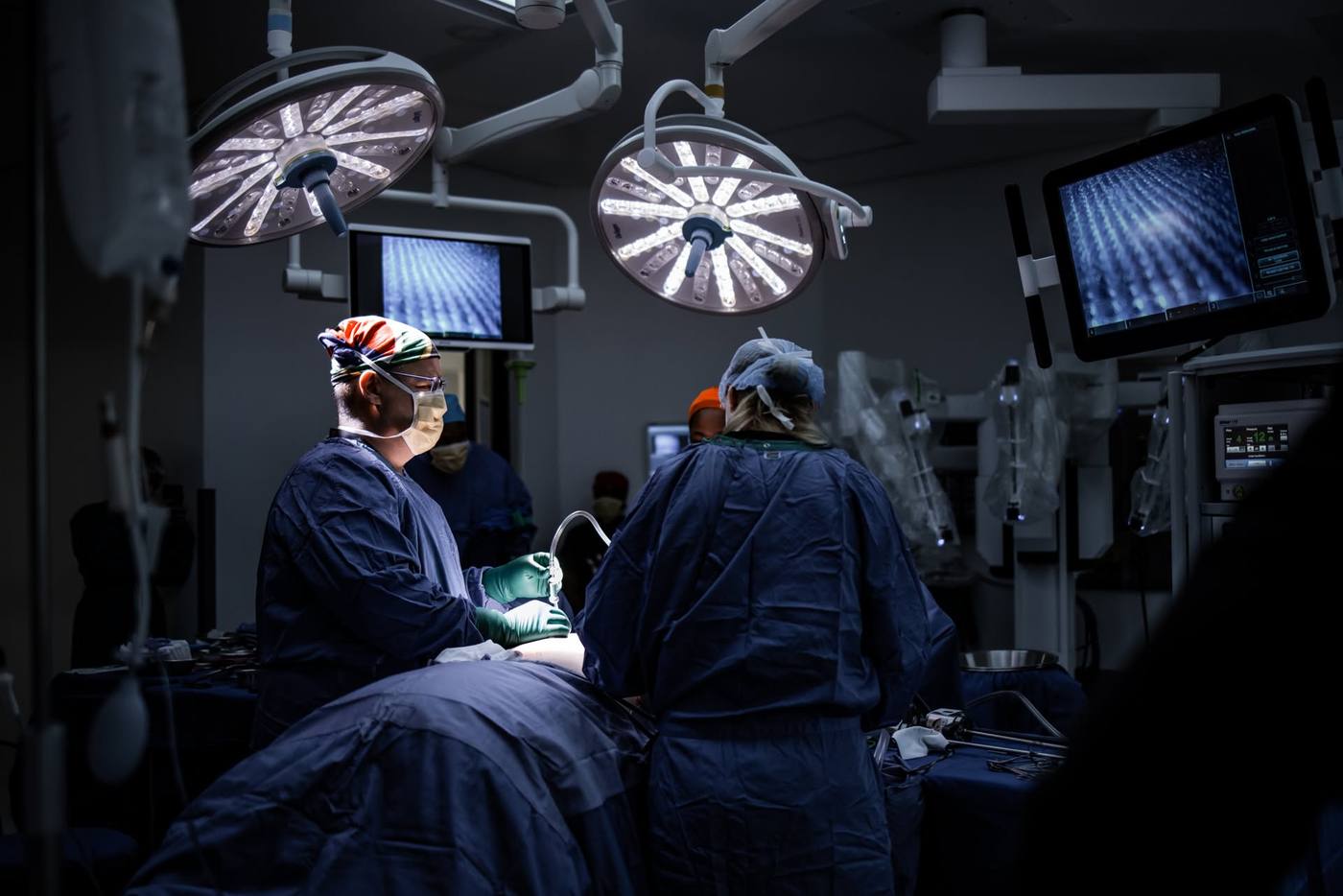
In robot-assisted surgery I operate from a console that controls fine instruments through a few small incisions, with a magnified 3D view of the operating field. The robot never operates on its own — it translates the surgeon’s hand movements into precise movements inside the body. Compared with open surgery, the small incisions usually mean less pain, less blood loss and a quicker return to normal activity.
I use the Da Vinci system for three main operations. For prostate cancer — where I have performed more than 250 robotic prostatectomies and run a proctorship programme training other surgeons — see Robotic Prostatectomy and Prostate Cancer Treatment. Kidney cancer and pelvic organ prolapse are described below.
All my robotic surgery is performed at Johannesburg Surgical Hospital in Northcliff.
Robotic partial nephrectomy (kidney cancer)
Many kidney cancers are now found early, often as a small mass on a scan done for another reason. Where the size and position of the tumour allow, I remove only the tumour and keep the rest of the kidney — a partial nephrectomy — rather than removing the whole kidney.
- International guidelines recommend partial nephrectomy for smaller (stage T1) kidney tumours wherever it is technically possible
- Keeping healthy kidney tissue helps protect your long-term kidney function
- Done robotically through small incisions, allowing precise removal of the tumour and careful repair of the kidney
- Not every tumour is suitable — we will review your scans together and discuss the safest option, which may be removal of the whole kidney or, for some small tumours, careful monitoring
Robotic sacrocolpopexy (pelvic organ prolapse)
Pelvic organ prolapse happens when the bladder, bowel or the top of the vagina drops down because its natural supports have weakened — often after childbirth or with age. It can cause a bulge or dragging feeling in the vagina and difficulty emptying the bladder or bowel.
I perform robotic sacrocolpopexy for women who have already had a hysterectomy and now have prolapse of the top of the vagina (the vaginal vault).
- Sacrocolpopexy lifts the top of the vagina back into position and secures it to the sacrum, the bone at the base of the spine, using a strip of surgical mesh
- It is a well-established, durable repair for prolapse at the top of the vagina
- Done robotically through small incisions in the abdomen instead of a large open wound
- Not everyone needs surgery — pelvic floor exercises and a pessary are also options, and we will discuss the use of mesh and its risks openly before you decide
To discuss robotic surgery, call 011 794 3549 or email appointment@urology.joburg. No referral is needed.
This information is general in nature and is not a substitute for a consultation.